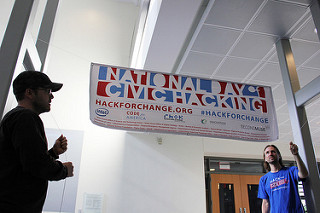
View photos from the event in our Flickr Group.










Grant work often fails for a simple reason: the right document exists, but nobody can prove it is current, complete, and authorized for sharing when a reviewer asks. For civic tech teams and nonprofits, that pressure is constant because grant deliverables are tied to budgets, timelines, procurement rules, and privacy obligations. This is where virtual data room due diligence becomes a practical workflow, not just an M&A concept: it helps teams centralize evidence, control who sees what, and keep an audit-ready trail.
Many organizations still rely on shared drives and email threads, then scramble during monitoring visits or renewal applications. If you have ever wondered, “Which version did we submit?” or “Can we share this contract without exposing personal data?”, a Virtual Data Room (VDR) can remove that uncertainty.
In technology circles, VDRs are often framed through business and engineering use cases. For example, a professional resource titled Virtual Data Rooms for Tech and Business Professionals: What You Need to Know positions VDRs as a modern toolset for teams dealing with sensitive files, complex collaboration, and accountability. That same mindset maps cleanly to grants, where documentation is both operational (invoices, deliverables) and compliance-driven (policies, certifications, approvals).
Grant programs frequently reference formal requirements for financial management, procurement, record retention, and audit readiness. In the U.S., many federally funded recipients align documentation practices with the Uniform Guidance in 2 CFR Part 200 on eCFR, which reinforces why structured access control and traceable records matter.
A VDR is not just “secure storage.” It is a controlled workspace designed for review, approval, and evidence preservation. That distinction is crucial for nonprofits and civic tech groups that must respond quickly to funder questions, independent audits, or internal governance reviews.
A common mistake is treating a VDR like a generic file cabinet. Instead, structure it around how funders and auditors actually review programs.
Start with a consistent structure that can be reused across grants. Consider separating what you “do” (program delivery) from what you “prove” (compliance evidence).
VDRs generally allow granular permissions by folder and by user group (view-only, download, upload, or manage). This is especially valuable when you collaborate with fiscal sponsors, partner municipalities, universities, or evaluation firms.
| Stakeholder | Recommended access | Typical content |
|---|---|---|
| Funder program officer | View-only, no download (as appropriate) | Submitted reports, KPIs, deliverables |
| Finance team | Upload and manage | Invoices, ledger exports, budget revisions |
| External evaluator | Scoped view-only | De-identified datasets, survey instruments |
| Legal counsel | Restricted folders | Contracts, amendments, compliance letters |
If your organization operates in Brazil or serves Brazilian partners, it is worth noting that there are local-market resources focused on these realities. One Brazilian-Portuguese language website dedicated to virtual data room solutions for the local market covers secure document sharing, M&A due diligence, legal and IT use cases, data protection under LGPD, and VDR provider comparisons for Brazilian businesses and legal professionals. When teams adopt global tools, that local compliance lens can be the difference between “secure” and “provably compliant.”
To explore a due diligence framing that is widely used in high-stakes reviews, see virtual data room due diligence.
Because civic tech work blends software delivery with public-interest outcomes, documentation can sprawl across Git repos, project trackers, cloud drives, and procurement emails. A VDR becomes far more effective when you attach a “definition of done” to each reporting cycle, such as:
Civic tech organizations often prefer lightweight tools like Google Drive or Microsoft SharePoint for daily collaboration, plus GitHub or GitLab for code. A VDR can sit “above” those systems as the controlled disclosure layer used for funders, auditors, and legal reviewers. Many teams export finalized artifacts from operational tools into the VDR at set milestones, ensuring the VDR contains stable evidence rather than in-progress drafts.
When evaluating vendors, look for features that match grant realities: permission granularity, watermarking, expiring access, full-text search, activity logs, and reliable Q&A workflows. Some providers used in professional settings include Ideals, alongside other enterprise document platforms, but the best choice depends on your risk profile, the number of external reviewers, and whether you need compliance features aligned to laws such as LGPD.
Grant compliance is easier when it is continuous. Instead of building a data room once per audit, treat it as a living space.
Grant documentation is a credibility system: it proves stewardship, impact, and compliance under real scrutiny. By adopting virtual data room due diligence as an operating habit, civic tech teams and nonprofits can reduce rework, respond faster to funders, and protect sensitive information without slowing delivery.
When a single public records request turns into a week of searching inboxes, shared drives, and filing cabinets, the real cost is public trust. Modernizing records management matters because local governments are expected to respond quickly, protect sensitive information, and preserve history, all while staffing and budgets stay tight. If you worry that “going digital” means a multi-year, million-dollar system replacement, there is a practical, phased path forward.
Public records programs sit at the intersection of open government and confidentiality. Clerks and records officers must meet retention rules, handle legal holds, and fulfill FOIA or state open records requests without exposing personal data, law-enforcement materials, or protected health information. Cyber risk raises the stakes: the Verizon Data Breach Investigations Report (updated annually, including 2024) continues to highlight how common credential misuse and ransomware are across sectors, reinforcing why access control and auditability cannot be afterthoughts.
A virtual data room is often associated with private-sector due diligence, but its core strengths map well to government records work: secure document sharing, controlled access, detailed audit logs, and structured collaboration. In plain terms, a data room can act as a governed “review space” for sensitive collections, especially when multiple departments, counsel, or external parties must coordinate quickly.
These capabilities are frequently discussed in Digital Business Insights, Technology Trends & Enterprise Solutions, which covers how virtual data rooms enable secure document sharing and collaboration for businesses, including VDR security features, common use cases, and best practices for implementation. For local governments, the same design patterns translate into faster review cycles and fewer risky email attachments.
Vendor choice matters, especially when budgets are tight and procurement needs defensible comparisons. One helpful approach is to rely on “compare-first” guidance like Compare virtual data room providers for startups. Unbiased reviews, pricing comparisons, and expert guides to help founders choose the right VDR for fundraising and M&A. Even though the audience is founders, the evaluation lens is relevant for municipalities that need transparent pricing, predictable permissions, and low administrative overhead. For an overview and comparisons, see data room.
Before buying tools, document where records live and how they are used. You can do this with spreadsheets and short interviews. Focus on high-risk and high-volume record series (police reports, HR files, procurement, contracts, council packets, permits).
Modernization is not only a software project; it is a governance project. Create simple conventions departments can follow immediately. Even a lightweight policy that specifies folder structures, naming rules, and who approves releases can reduce chaos quickly.
If you cannot centralize everything at once, add a secure review layer for the records that most often trigger requests, litigation holds, or interdepartmental collaboration. This is where a data room can be cost-effective: you keep systems of record in place while creating a governed space for sharing, redaction workflows, and tracked access.
Many governments already pay for Microsoft 365 or Google Workspace. Leverage those platforms for day-to-day creation and retention where appropriate, then reserve the virtual data room for cases that need tighter permissioning, external access, or deeper audit trails. Common pairings include:
Choose one department and one use case. Good pilots include procurement bid evaluations, contract repositories, or council agenda packet compilation. Define success metrics that are easy to track: time to assemble a response, number of versions, number of external recipients, and audit completeness.
Modern public records management hinges on preventing accidental disclosure as much as stopping attackers. Prioritize controls that are usually available in existing subscriptions or standard VDR tiers. The NIST Zero Trust Architecture (SP 800-207) provides a useful framework: verify explicitly, use least privilege, and assume breach. Practically, that means:
To keep costs predictable, evaluate products using scenarios rather than feature checklists. Ask: How many external reviewers do we typically have? Do we need granular permissions by folder and file? Can we export audit logs for legal review? How quickly can non-technical staff set up a new workspace?
Also consider licensing that matches public-sector realities: seasonal peaks (elections, budget season), temporary investigations, and projects that open and close. A data room subscription that supports short, intensive projects can be cheaper than customizing a permanent system for every edge case.
With a disciplined scope, many municipalities can show meaningful improvements in one quarter: fewer ad hoc shares, faster retrieval, clearer retention decisions, and better documentation for audits and public inquiries. The goal is not perfection; it is defensible, repeatable handling of records. And when residents ask, “Can you show how this was reviewed and released?” you will be able to answer confidently.
Hacking has been around for decades, and with the rise of technology, it has become a lucrative business for many people. Ethical hackers use their skills to identify vulnerabilities in computer systems and networks to help organizations improve their security. However, some hackers use their skills for malicious purposes and engage in activities such as stealing personal information and money. In recent years, there has been an increase in the number of hacking challenges that offer monetary rewards for successful hacks. Here, we will discuss the top hacking challenges for money.
Yes, you can make money by hacking, but it is essential to note that hacking is illegal, and you can face serious legal consequences if caught. However, ethical hacking is legal, and many organizations offer monetary rewards for finding vulnerabilities in their systems. These rewards are known as bug bounties.
A bug bounty is a program that offers rewards to individuals who identify and report security vulnerabilities in a company’s system or software. Bug bounty programs are becoming increasingly popular among companies as they help identify and fix vulnerabilities before they can be exploited by malicious actors. The reward amount for bug bounties varies from company to company and can range from a few hundred dollars to several hundred thousand dollars, depending on the severity of the vulnerability.
One of the most popular bug bounty programs is run by Microsoft. The company offers rewards of up to $250,000 for identifying and reporting security vulnerabilities in its products and services. Another popular bug bounty program is run by Google, which offers rewards of up to $150,000 for identifying and reporting vulnerabilities in its products and services.
Here are 5 famous hacking challenges for money, excluding Microsoft and Google’s bug bounty programs:
A good hacker is called a white hat hacker or an ethical hacker. White hat hackers use their skills to identify and report security vulnerabilities in computer systems and networks. They work with organizations to improve their security and protect them from malicious attacks. White hat hackers are highly skilled and knowledgeable about computer systems and networks and use their skills for good.
One of the most highly-paid hackers is Kevin Mitnick. Mitnick is a former black hat hacker who now works as a security consultant. He is known for his high-profile hacks of companies such as Motorola, IBM, and Sun Microsystems. After serving five years in prison for his hacking activities, Mitnick turned his skills to ethical hacking and now works with companies to improve their security. Mitnick charges $2,500 per hour for his consulting services, making him one of the highest-paid hackers in the world.
Another highly paid hacker is Dan Kaminsky. Kaminsky is a white hat hacker and security researcher who is known for his work on DNS security. He is highly regarded in the security industry and has worked with companies such as Microsoft and Cisco to improve their security. Kaminsky charges $500 per hour for his consulting services.
Hacking challenges that offer monetary rewards have become increasingly popular in recent years. These challenges not only provide an opportunity for individuals to showcase their skills but also help organizations improve their security. However, it is important to note that hacking is illegal, and individuals who engage in malicious hacking can face serious legal consequences.
Are you looking to create a subdomain in GoDaddy? GoDaddy is one of the most popular domain registration and hosting services available. With its easy-to-use interface and a plethora of features, it’s no surprise that many individuals and businesses choose GoDaddy as their preferred domain registrar.
In this article, we will guide you through the steps required to create a subdomain in GoDaddy. We’ll also cover topics such as creating a DNS record for your subdomain, the price of GoDaddy subdomains, using cPanel to manage your subdomain, and setting up a subdomain for email.
Creating a subdomain in GoDaddy is a straightforward process. Follow the steps below to get started:
Step 1: Log in to your GoDaddy account The first step in creating a subdomain in GoDaddy is to log in to your account. If you don’t already have an account, you can create one by following the prompts on the GoDaddy homepage.
Step 2: Navigate to the DNS management page Once you’re logged in to your GoDaddy account, navigate to the DNS management page. This is where you’ll be able to create a DNS record for your subdomain.
Step 3: Create a DNS record for your subdomain To create a subdomain in GoDaddy, you’ll need to create a DNS record for it. A DNS record is essentially a set of instructions that tell the internet where to find your subdomain.
To create a DNS record for your subdomain, click the “Add” button next to the “Records” section of your DNS management page. Then, select “A” from the dropdown menu and enter the name of your subdomain in the “Host” field. In the “Points to” field, enter the IP address of the server where your subdomain will be hosted.
Step 4: Save your changes Once you’ve entered the necessary information, click the “Save” button to create your DNS record.
Congratulations! You’ve successfully created a subdomain in GoDaddy.
The cost of a subdomain in GoDaddy can vary depending on the type of subdomain you’re looking to create. In general, subdomains in GoDaddy are relatively inexpensive.
The cost of a subdomain in GoDaddy starts at around $2.99
View photos from the event in our Flickr Group.
Interested in sponsoring this year? Find out more here.
 |
 |
 |
 |
 |
 |
 |
 |
 |
 |
 |
 |
 |
 |
 |
 |
 |
 |
 |